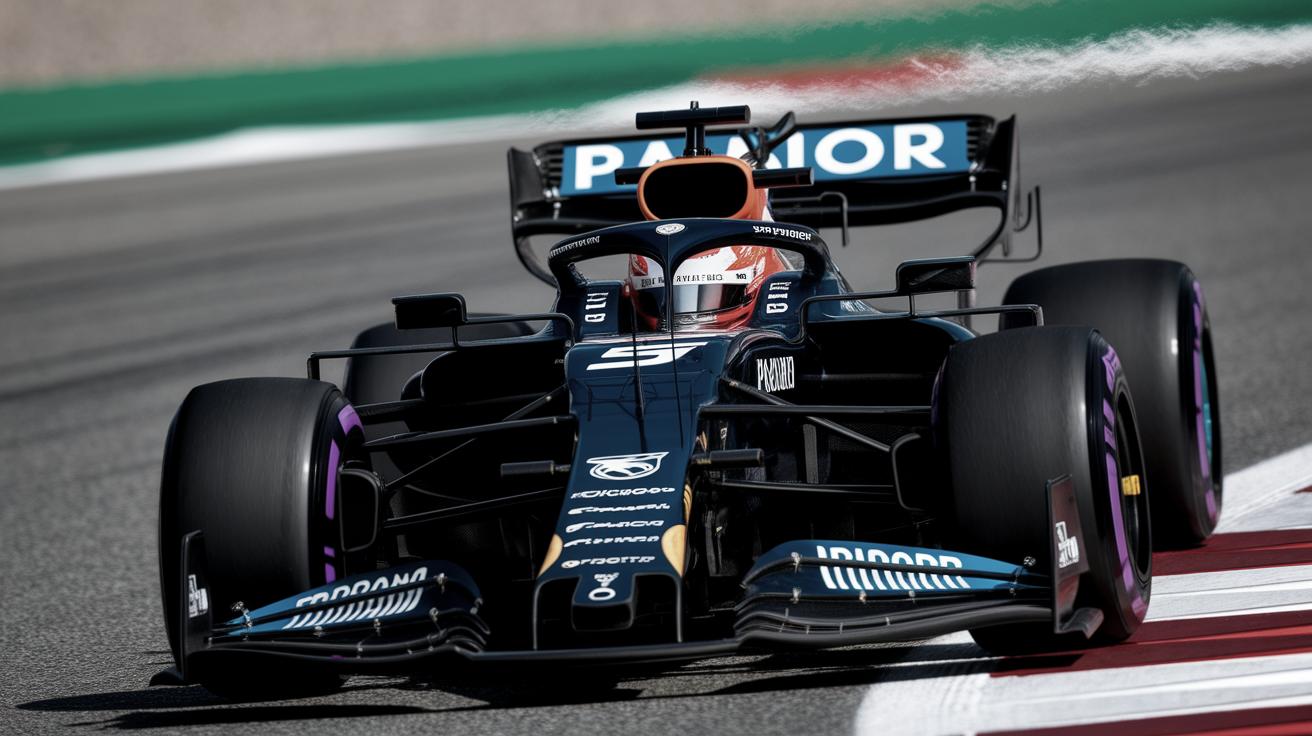
The G-Force Experience in Formula 1 Racing
Formula 1 racing is not just a test of speed and technology; it is an extreme demonstration of human physical endurance. One of the most fascinating aspects of this sport is the gravitational forces, or “g-forces,” that drivers experience during races. G-forces are crucial to understanding both the challenges seen in F1 and the technological innovations of the cars themselves. In this blog post, we will explore the different types of g-forces encountered by F1 drivers and examine how these are generated during various driving situations. From high-speed corners to rapid acceleration and deceleration, we’ll take a closer look at the exhilarating—and sometimes punishing—forces that make Formula 1 a unique sporting challenge.
Banked Turns
Banked turns in racetracks, where the road is tilted at an angle, play a crucial role in the forces experienced by drivers. These turns help vehicles maintain greater speeds than would be possible on a flat surface by generating additional centripetal force that aids cornering. In Formula 1 races, tracks with significant banking, although less common compared to other motorsport types, are engineered to push the limits of speed and control.
When traversing a banked turn, drivers can experience lateral g-forces exceeding 5 g’s. This force pulls them sideways against their seat, demonstrating the importance of both physical fitness and engineering ingenuity. The degree of banking and the speed at which the driver enters the turn can dramatically affect the magnitude of g-forces, challenging drivers to master their lines with precision.
Downforce
Downforce is another critical element in the generation of g-forces experienced by F1 drivers. Produced primarily through aerodynamic components such as the wings and diffusers, downforce increases the car’s grip on the track. This added grip allows drivers to take turns at higher speeds without losing control. As a result, g-forces are amplified, especially in corners where these forces are crucial for maintaining speed.
In high-speed corners, the downforce can generate vertical g-forces sometimes exceeding 4 g’s. This force pushes the car down into the track, improving tire traction and allowing for dramatically higher cornering speeds. Engineers constantly refine aerodynamics to strike a balance between maximum downforce and minimal drag to optimize both speed and stability.
Final Thoughts
Experiencing high g-forces is an inherent part of being a Formula 1 driver, pushing both human endurance and car technology to the edge. Training to withstand these forces is an essential aspect of a driver’s preparation. Strengthening neck and core muscles can help F1 drivers manage the immense forces experienced during races over extended periods.
Moreover, as F1 technology continues advancing, every innovation seeks to enhance performance while managing these complex forces. Understanding the dynamics of g-forces is not just beneficial for drivers but crucial in designing safer and more competitive racing machines.
Calculate G Force FAQ
Calculating the g-force is essential for teams to understand the stresses experienced by both the driver and car during a race. Typically, g-force can be calculated using the formula: g = F / (m * g₀), where F is the force, m is the mass, and g₀ is the acceleration due to gravity (approximately 9.81 m/s²).
This knowledge helps in adjusting car setups for maximum performance under expected track conditions. When g-force data is analyzed, teams can make crucial decisions on tire wear, fuel strategy, and driver safety, ensuring the best performance while minimizing risks.
Related HowStuffWorks Articles
–
How Formula 1 Cars Work
–
The Physics of Racing
–
Advancements in Car Safety Technology
More Great Links
–
F1 Technical Regulations
–
Driver Training and Conditioning
–
History of Formula 1 Races
Summary of Main Points
| Aspect | Details |
|---|---|
| Banked Turns | Drivers can experience lateral g-forces exceeding 5 g’s. |
| Downforce | Vertical g-forces can exceed 4 g’s in high-speed corners due to aerodynamic grip. |
| Driver Training | Physical conditioning is crucial for coping with sustained high g-forces. |
| Calculation | G-force calculation is vital for car setup and strategic decisions. |