The Fascinating World of the Nürburgring
If you’re a fan of motorsport, the Nürburgring is a name that commands respect and awe. Known as one of the world’s most challenging and famous race tracks, the Nürburgring has captivated drivers and enthusiasts since its inception. This blog post dives into the intricacies and history of this legendary circuit, covering everything from its exact length and construction to the more exhilarating and dangerous parts of the track. We’ll also explore the community, vehicles, and culture surrounding the 24-hour race—one of the pinnacles of endurance motorsport. Whether you’re planning a visit or just keen to know more about this automotive marvel, our guide will explore all facets of the Nürburgring, giving you a comprehensive understanding of what makes this circuit one of a kind.
WHERE IS THE NÜRBURGRING?
Located in the lush Eifel mountains of Germany, the Nürburgring is more than just a race track; it’s a motorsport icon. The circuit stretches through the village of Nürburg, a name synonymous with speed and adrenaline. Nestled within the Rhineland-Palatinate region, this area is renowned not only for its racing heritage but also for its beautiful landscapes, attracting tourists and racing enthusiasts alike.
The Nürburgring is accessible from several major cities, making it a popular destination for those who want to get close to the action. It’s about 70 kilometers away from Bonn, one of Germany’s political hubs, and approximately 120 kilometers from the bustling streets of Cologne. This strategic location allows easy access for international visitors, with several transport options available, including train, car, and shuttle services designed exclusively for race events.
WHEN WAS THE NÜRBURGRING BUILT?
Construction of the Nürburgring began in the early 1920s, a period when Germany was looking to recover from the economic challenges of World War I and the Great Depression. It was finished in 1927, opening as a state-of-the-art racing venue designed to test the limits of both vehicles and drivers. Originally constructed to serve as a proving ground for German automotive manufacturers, the Nürburgring quickly gained recognition as a formidable racing venue worldwide.
Over the years, the circuit has seen numerous modifications to enhance safety and maintain international racing standards. While it retains much of its original charm and challenge, modern adaptations have ensured the Nürburgring remains relevant in the ever-evolving world of motorsports. Its history is deeply intertwined with that of Germany’s automotive excellence and is a testament to the country’s engineering prowess.
HOW LONG IS A LAP OF THE 24-HOUR RACE AT THE NÜRBURGRING?
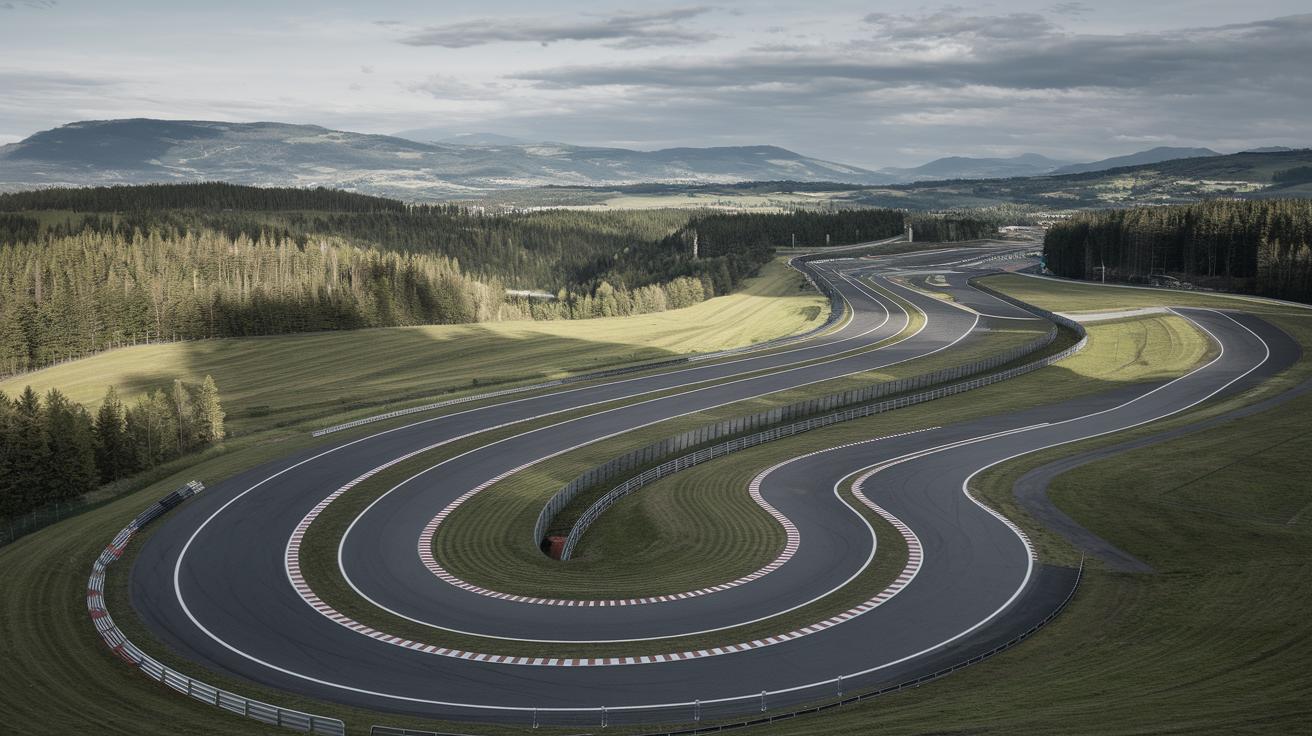
The Nürburgring is renowned for its complexity with the Nordschleife, the longer of its circuits, being the focal point of endurance races like the 24-hour event. A single lap in the 24-hour race spans approximately 25 kilometers or 15.5 miles, winding through forested hills and presenting a plethora of challenges at every turn. This extensive length not only makes it difficult to master but also provides plenty of opportunities for thrilling performances and strategic overtakes.
Racers face a labyrinth of over 70 corners, each with varying degrees of difficulty and requiring unparalleled skill and concentration. Its length and layout have led to it being dubbed “The Green Hell,” a name given by Formula One legend Jackie Stewart. The circuit’s harrowing yet mesmerizing nature has cemented its reputation as a pinnacle destination for racing aficionados worldwide.
HOW MANY VEHICLES SHARE THE TRACK?
The 24-hour race at the Nürburgring is a true test of endurance not just for the vehicles but also for the drivers who navigate them. Typically, the race sees upwards of 150 cars competing across various categories, each vying for supremacy on the track. This impressive number underscores the Nürburgring’s status as a premier racing venue, attracting global talent and technology.
Each vehicle on the track represents the pinnacle of engineering from manufacturers around the world. The wide range of cars from high-performance GT vehicles to more modestly powered models provides a diverse competitive environment. Managing space and strategy becomes critical as drivers navigate the narrow and formidable circuit, adding a layer of complexity to the ultimate racing challenge.
WHAT DO YOU NEED TO START AT THE NBR?
Participating in the Nürburgring’s 24-hour race is a dream for many, but it requires meticulous preparation and compliance with strict entry conditions. Teams must register well in advance and demonstrate that their vehicles meet specific performance and safety criteria. Furthermore, drivers need the appropriate licenses, often necessitating experience in endurance racing prior to competing in this esteemed event.
Once these prerequisites are met, teams must also ensure their vehicles are equipped with necessary safety gear, including roll cages and fire extinguishers. The rigorous standards reflect the challenging nature of the race itself, ensuring that the track remains equally thrilling and secure for all participants and spectators cheering from the sidelines.
HOW MANY DRIVERS ARE THERE PER TEAM AND VEHICLE?
To tackle the extreme demands of the 24-hour race, teams typically consist of up to three or four drivers per vehicle. This driver swap system allows racers to rest and recuperate during the grueling event, maintaining peak performance and focus on this relentless circuit. It further highlights the importance of teamwork and strategy in endurance motorsports.
Driver rotations must be carefully timed, often aligning with scheduled pit stops for refueling and vehicle maintenance. Each member brings unique strengths to the team, whether it’s technical skill, stamina, or strategic insight, underscoring the multifaceted challenge of the Nürburgring’s 24-hour spectacle.
WHICH PART OF THE CIRCUIT IS MOST DANGEROUS AND WHY?
Among the Nürburgring’s infamous corners and straights, the section known as “Pflanzgarten” is considered one of the most dangerous. Its high-speed jumps and crests challenge drivers’ reflexes and vehicle setups as they negotiate these undulating segments. Misjudging the line or speed can lead to serious mishaps given the narrowness and lack of run-off areas.
This part of the track typifies the unpredictable nature of the Nürburgring, where elevation changes and blind corners test even the most experienced drivers. It requires a perfect blend of courage, precision, and skill to navigate safely, emphasizing the perilous yet magnetic appeal of this celebrated racing venue.
HOW MANY SPECTATORS ARE EXPECTED THIS YEAR?
The 24-hour race at the Nürburgring is a festival of speed that draws in massive crowds each year. For 2023, organizers anticipate over 200,000 spectators will flock to the circuit, eager to witness the exhilarating racing action firsthand. This figure underscores the event’s enduring popularity among motorsport enthusiasts worldwide.
Spectators come not only for the racing itself but also for the vibrant atmosphere, complete with camping, music, and food. It’s a celebration of motorsport culture, where fans can showcase their passion alongside like-minded individuals, all while basking in the electrifying energy of the Nürburgring.
MARTIN TOMCZYK
Martin Tomczyk is a name synonymous with excellence in the motorsport world. The German driver has carved an impressive career with various victories and significant contributions to several renowned racing teams. A veteran of the Nürburgring, Tomczyk’s experience and insight into this challenging circuit make him a celebrated figure among racing fans and aspiring drivers alike.
His unparalleled ability to adapt to the evolving nuances of the track, coupled with his strategic acumen, has influenced many successful campaigns at the Nürburgring. Tomczyk exemplifies the qualities necessary to conquer the “Green Hell,” serving as an inspiration for future generations of racers.
WHERE ARE THE BEST PLACES TO CAMP?
Camping at the Nürburgring during race events is a tradition as cherished as the race itself, offering an immersive way to experience the spirit of the event. Popular camping spots include Adenau and Brünnchen, both known for their vibrant atmosphere and prime viewing locations. These areas provide a front-row seat to the action, allowing campers to feel the roar of the engines up close.
For those seeking a more serene ambiance, camping sites in the surrounding Eifel mountains offer a picturesque backdrop against which to enjoy the event. From family-friendly areas with ample amenities to those designed for hardcore racing fans, options abound to accommodate varying preferences and ensure an unforgettable experience.
WHERE IS THE BEST BRATWURST?
No visit to the Nürburgring is complete without indulging in some local German cuisine, and bratwurst is often at the top of the list. Fans often rave about the delicious offerings available at vendor stands throughout the circuit, with many considering those near the main grandstand to be the best.
These vendors often bring their regional specialties to the table, offering delectable sausages served with sauerkraut and mustard. The combination of delicious food, thrilling races, and lively camaraderie makes for an unforgettable experience, as patrons savor the authentic taste of Germany amid the ambient buzz of motorsport excitement.
WHAT DOES “BALANCE OF PERFORMANCE” MEAN?
In motorsport, “Balance of Performance” (BoP) is a regulating mechanism used to ensure competitive parity among different vehicle types and manufacturers. It involves adjustments to factors like engine power, weight, and aerodynamics to level the playing field, making races at venues like the Nürburgring both exciting and fair.
BoP has become an essential part of endurance racing, preventing any single manufacturer from dominating the competition purely on technical advantages. By emphasizing driver skill and team strategy, BoP enhances the spectator experience, ensuring a competitive race through strategic adjustments and fierce on-track battles.
WHAT WAS THE FASTEST LAP EVER DRIVEN IN THE 24-HOUR RACE?
The Nürburgring 24-hour race has seen some blistering lap times, with the fastest recorded lap belonging to driver Laurens Vanthoor. Clocking a remarkable time of 8 minutes and 10.921 seconds, Vanthoor set the benchmark while driving an Audi R8 LMS, a standout performance that continues to inspire awe and admiration.
This time represents not only the pinnacle of driver and machine synchronization but is a testament to the relentless pursuit of speed and precision that defines endurance racing. As technology and skill continually evolve, the record remains a significant milestone in the Nürburgring’s storied history.
WHY IS THE FIELD DIVIDED INTO DIFFERENT STARTING GROUPS?
To manage the diverse range of vehicles participating in the 24-hour race, organizers divide the field into multiple starting groups based on vehicle performance and classification. This strategy helps minimize congestion and reduce the risk of accidents, ensuring a smoother race experience for all competitors.
The division allows faster, more powerful cars to operate separately from their slower counterparts, maintaining the integrity of the competition. The staggered start adds an additional tactical layer to the race, as teams strategize to maximize their position relative to their immediate rivals while navigating through varied traffic.
IS THERE A SPEED LIMIT ON THE TRACK?
While the Nürburgring is famed for high-speed racing, specific sections of the track enforce speed limits to enhance safety, especially during public driving sessions known as “Touristenfahrten.” In these circumstances, speed limits are typically imposed around heavily trafficked areas and sharp corners to ensure driver safety.
During competitive events such as the 24-hour race, however, speed limits are generally not imposed except under yellow flag or safety car conditions. In these instances, drivers must adhere to specific regulations to ensure the safety and fairness of the event, highlighting the delicate balance between thrilling speed and essential safety protocols.
WHAT WILL THE WEATHER BE LIKE?
The Nürburgring is infamous for its unpredictable weather, a defining feature that adds complexity to any racing event held at the circuit. Given its mountainous location, conditions can shift dramatically, with sunshine, rain, and fog all possible within a single lap, testing the adaptability and strategic planning of every team.
Forecasters typically anticipate a mix of weather patterns during the 24-hour race, making tire choice and pit strategies particularly crucial. Teams must be prepared to make adjustments on the fly, ensuring that their vehicle can handle whatever the Nürburgring’s climate throws their way, highlighting the mental and technical demands of endurance racing.
WHO IS THE MOST SUCCESSFUL DRIVER?
Among the numerous talented individuals who have raced the Nürburgring, Klaus Ludwig stands out as the most successful driver in the history of the 24-hour race. With several victories to his name, Ludwig’s skill and perseverance in challenging conditions have made him a legend of the circuit.
Klaus Ludwig’s legacy at the Nürburgring is marked by his adept ability to navigate its demanding terrain under pressure. His triumphs are a testament to his racing acumen and tactical prowess, earning him a revered place in the annals of Nürburgring history and within the global motorsport community.
WHY ARE SOME VEHICLES EQUIPPED WITH A FLASHING BLUE LIGHT BEHIND THE WINDSCREEN?
In endurance races like those at the Nürburgring, vehicles equipped with flashing blue lights denote the presence of an “Amateur Driver” or act as an indicator for vehicles that need special awareness from others around them. It’s a crucial safety feature that helps both drivers and race officials identify these vehicles on the track, enhancing overall safety.
The blue lights can also signify vehicles that are not performing at full competitive speed due to mechanical issues or other factors. By making them easily identifiable, the lights help ensure that faster vehicles can navigate safely, maintaining the dynamic flow and strategic complexity of the race.
HOW MANY TIMES HAS THE RACE BEEN HELD?
As of 2023, the Nürburgring 24-hour race has been held over 50 times, with the first event taking place in 1970. Over the decades, it has grown in prestige and popularity, attracting top-tier competitors and becoming a cornerstone of the endurance racing calendar.
Each race has contributed to the storied history of the Nürburgring, yielding unforgettable moments and iconic performances. The event’s longevity underscores its importance in the world of motorsport, continuing to challenge drivers and thrill audiences year after year.
WHICH BRAND HAS BEEN THE WINNER OF MOST OVERALL VICTORIES SO FAR?
Porsche holds the record for the most overall victories at the Nürburgring 24-hour race, a testament to the brand’s commitment to performance and endurance. With a legacy of success, Porsche exemplifies engineering excellence, consistently achieving high performance and reliability on one of the world’s toughest racing circuits.
Their vehicles have become synonymous with speed and resilience, underpinned by innovative technology and a dedicated team of drivers and engineers. This impressive track record cements Porsche’s status as a dominant force in endurance racing, inspiring competitors and fans alike.
WHO ARE THE PAST 10 WINNERS?
The past decade of Nürburgring 24-hour races has seen a variety of manufacturers competing fiercely for the top spot. Names like Audi, BMW, and Mercedes have frequently appeared among the victors, highlighting the competition between leading automotive brands.
The diversity of winners reflects the competitive nature of the race, with each year bringing new strategies and technological advancements in the bid for success. This variety not only showcases the prowess of different teams and cars but also ensures an exciting and unpredictable race for audiences worldwide.
WHICH IS THE MOST SUCCESSFUL TEAM?
Team Manthey Racing is often credited as the most successful team in the Nürburgring 24-hour race’s history. Known for their innovative strategies and technical expertise, Manthey Racing has secured numerous victories on the challenging circuit, often in collaboration with automotive giant, Porsche.
The teamwork, precision, and rivalry that they bring to the track have played a significant role in their achievements, establishing them as a cornerstone of endurance racing excellence. Their success has been a beacon of aspiration for other competitors, setting high standards in both performance and teamwork.
WHICH MODEL IS CONSIDERED THE MOST LEGENDARY BMW EVER TO START?
The BMW M3 E30 is often hailed as the most legendary BMW to have competed at the Nürburgring. Renowned for its agility and racing pedigree, the M3 E30 epitomizes BMW’s dedication to precision engineering and competitive racing spirit.
This model holds a special place in motorsport history, having secured multiple wins and endearing itself to enthusiasts worldwide. Its iconic status is a testament to its engineering sophistication and legacy of performance, continuing to influence BMW’s contemporary racing endeavors.
HOW MANY VERTICAL METRES DO THE DRIVERS TAKE ON DURING A LAP?
The Nürburgring features a substantial elevation change, with drivers experiencing approximately 300 vertical meters over the course of a single lap. These elevation shifts add a vital element of complexity to the circuit, requiring precise vehicle setup and driver skill to negotiate effectively.
Such dramatic changes in elevation impact braking, acceleration, and cornering, requiring significant strategic planning and adaptation as conditions evolve. This feature of the Nürburgring contributes to its reputation as one of the most demanding circuits in motorsport.
NINE OUT OF TEN.
The phrase “Nine out of ten” is often heard among Nürburgring enthusiasts, reflecting the belief that nine out of ten drivers aspire to race on this iconic circuit. It represents the universal appeal of the Nürburgring among racing fans, who view it as the ultimate test of skill and endurance.
For many, participating in an event or even completing a lap on this legendary track ranks among the pinnacle of their racing experiences, fueling dreams and ambitions as they aim to conquer the “Green Hell.”
THE 24 HOURS NÜRBURGRING.
The Nürburgring 24-hour race is more than a competition; it’s a celebration of endurance racing culture. Every element of the event, from the diversity of vehicles to the passionate crowd, contributes to an atmosphere of excitement and camaraderie unlike any other.
As drivers push their limits over the grueling 24-hour period, fans revel in the spirit of motorsport that echoes through every corner of the track. This legendary race embodies the thrills, challenges, and community that make motorsport a beloved global spectacle.
MOTOR TREND RECOMMENDED STORIES
Motorsport enthusiasts looking for more immersive stories and detailed analyses can find numerous recommended reads. Publications like Motor Trend offer a wealth of articles that delve into the nuances of racing and automotive innovation, providing readers with a deeper appreciation of the sport.
These articles often highlight the personal experiences of drivers, technological advancements, and the ever-evolving strategies that define the forefront of endurance racing. For those enamored by the Nürburgring, such content offers an insightful extension to the race’s vibrant narrative.
YOU MAY ALSO LIKE
Fans of the Nürburgring and motor racing in general might also enjoy exploring related topics that broaden their understanding of dynamic motorsport landscapes. From virtual racing platforms to new advancements in automotive design, there is always more to discover.
Whether it’s exploring the rise of esports in racing or learning about environmental initiatives within motorsport, there are countless compelling stories that cater to the interests of any keen motorsport enthusiast.
More articles
Esports racer between the real and virtual world.
As the esports scene continues to evolve, its growing intersection with traditional motorsport offers exciting opportunities and challenges. Esports racing provides a platform for budding talents to experience the thrill of competition, often bridging the gap between virtual simulations and real-world racing disciplines.
BMW M Mixed Reality with multiplayer and new features.
BMW M’s foray into mixed reality is transforming how fans and drivers engage with motorsport, offering new perspectives and interactive experiences. Through innovations in multiplayer formats and augmented reality, BMW M continues to push the boundaries of immersive motorsport experiences.
BMW M is returning to the toughest endurance race in the world.
Fans eagerly await BMW M’s return to the Nürburgring, where their legacy of performance and innovation promises to deliver unforgettable moments. As they prepare to tackle the challenges of the world’s toughest endurance race, BMW M aims to achieve new milestones in their storied racing history.
| Topic | Description |
|---|---|
| Location and History | The Nürburgring is a historical circuit in Germany, renowned for its challenging terrain and rich racing history. |
| Track Details | A lap of the Nürburgring 24-hour race is 25 km, with complex elevation and numerous dangerous sections. |
| Race Participation | A high number of vehicles and diverse driving teams participate, necessitating strategic races in various conditions. |
| Culture and Community | The Nürburgring hosts massive crowds and camping traditions, blending racing excitement with cultural experiences. |
| Notable Personalities and Records | Iconic drivers and competitive teams highlight the race’s history, setting records that inspire motorsport enthusiasts. |